
The Hidden Environmental Cost of Online Shopping
Online shopping has become second nature for many of us. Need a phone charger? Two clicks. Running low on toothpaste? It can be on your doorstep tomorrow. Platforms like Amazon, Walmart, and Temu have built incredibly efficient systems that make buying almost anything effortless. Convenience is the name of the game—and it’s hard to argue with the comfort of ordering something from your couch and having it show up within days, or even hours.
But behind the convenience of online shopping is a growing environmental problem that often goes unnoticed.
Shipping Isn’t Free for the Planet
One of the biggest sustainability concerns with online shopping is the carbon footprint created by shipping. Every time we click “Buy Now,” a long chain of transportation is set into motion. Products are shipped from factories to warehouses, from warehouses to distribution centers, and finally from those centers to our homes.
Each step typically involves trucks, airplanes, ships, or vans powered by fossil fuels. The rise of fast shipping has made this even more energy-intensive. Services promising one-day or even same-day delivery require logistics networks that prioritize speed over efficiency, often sending partially filled trucks or planes on the road just to meet tight delivery windows.
According to the International Energy Agency, freight transportation is a significant contributor to global carbon emissions, and the rapid growth of e-commerce logistics is only increasing demand for these delivery networks. When millions of packages are moving every day, those emissions add up quickly.
The Packaging Problem
Then there’s the packaging.
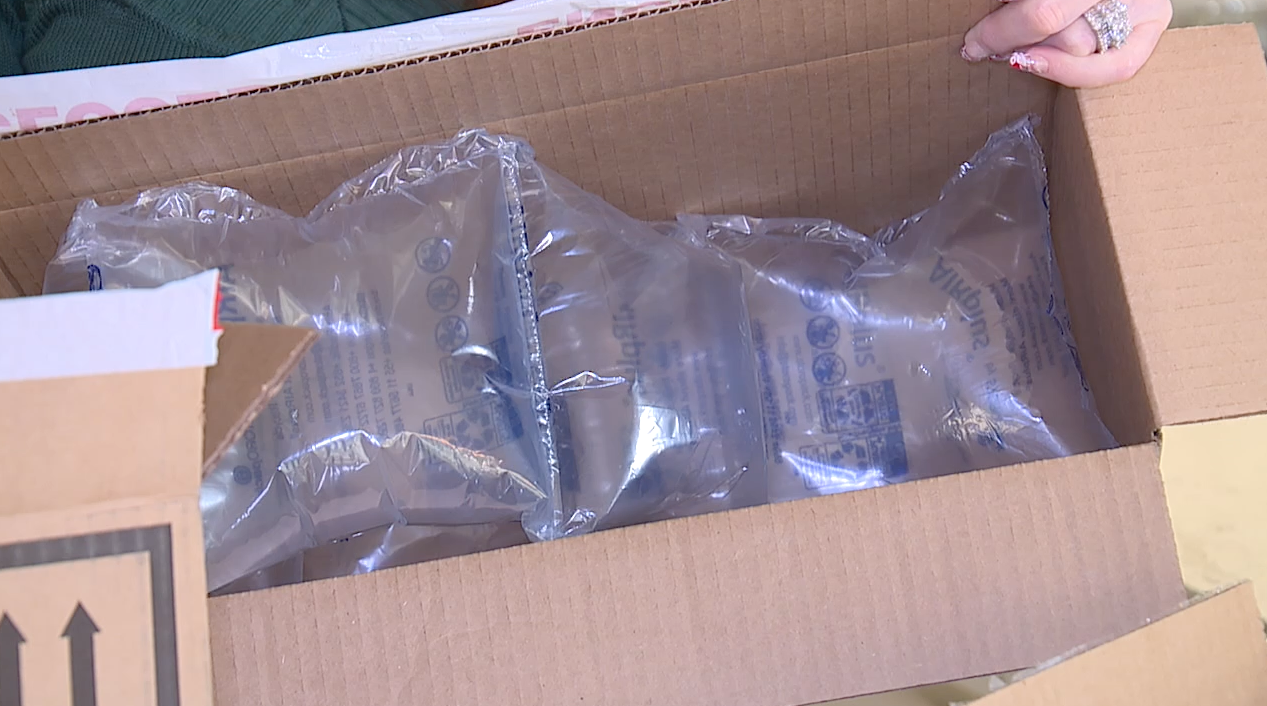
If you’ve ever ordered a small item online and received it in a large cardboard box filled with plastic air pillows, you’ve already seen the issue firsthand. Online retailers rely heavily on packaging to protect items during transit, which means layers of materials—cardboard boxes, plastic wrap, bubble cushioning, paper stuffing, tape, and sometimes even additional boxes inside the main box.
While some of this packaging can be recycled, much of it ends up in landfills. Plastic packaging in particular can take hundreds of years to break down. Even cardboard, which is widely recyclable, still requires energy and resources to produce, transport, and process.
Organizations like the Environmental Protection Agency estimate that containers and packaging make up a significant portion of municipal solid waste in the United States. As online shopping grows, so does the volume of packaging waste generated by deliveries.

The “Endless Shelf” Problem
Another issue is the sheer number of products available online.
E-commerce platforms now offer millions—sometimes hundreds of millions—of items. This “endless shelf” means sellers can upload almost any product imaginable. While that variety might seem like a benefit for consumers, it also opens the door to an enormous number of low-quality products entering the marketplace.
Many of these items are manufactured quickly and cheaply, often with little emphasis on durability or long-term use. Because they are inexpensive, consumers may not think twice about replacing them when they break.
For example, a poorly made phone charger, kitchen gadget, or clothing item might last only a few months before it stops working. Instead of repairing it, most people simply order another one online. The cycle continues: manufacture, ship, break, discard, replace.
From a sustainability standpoint, this is a major problem. Products that aren’t built to last contribute to growing amounts of waste, resource extraction, and manufacturing emissions. Every replacement product requires new materials, energy, and transportation.

Convenience vs. Conscious Consumption
None of this means online shopping is inherently bad. In some cases, it can even be more efficient than traditional retail. For example, centralized warehouses can reduce the need for multiple car trips to the store.
However, the current scale and speed of e-commerce has created a system that encourages constant purchasing and rapid delivery—two things that tend to conflict with sustainability goals.
The key challenge moving forward is finding ways to keep the convenience while reducing the environmental cost. That could mean improved packaging design, slower but more efficient shipping options, stronger product quality standards, or encouraging consumers to think more carefully about what they buy.
Ultimately, every online purchase has an environmental footprint that extends far beyond the checkout page. The next time a package arrives at the door, it might be worth asking: how far did this travel, and how long will it last?
Small questions like that can start bigger conversations about how we shop—and how those choices affect the planet.
Bibliography
Environmental Protection Agency. (2023). Containers and Packaging: Product-Specific Data. U.S. Environmental Protection Agency.
International Energy Agency. (2023). Transport Sector CO₂ Emissions. International Energy Agency.
Matthews, H. S., Hendrickson, C. T., & Soh, D. (2021). Environmental and economic effects of e-commerce logistics. Transportation Research Part D: Transport and Environment.
World Economic Forum. (2020). The Future of the Last-Mile Ecosystem: Transition Roadmaps for Public- and Private-Sector Players.
Spears, D. (2023). Fighting wasteful packaging: What customers can do when they get a small item delivered in a big box. KTNV 13 Investigates.
Available at: https://www.ktnv.com/13-investigates/fighting-wasteful-packaging-what-customers-can-do-when-they-get-a-small-item-delivered-in-a-big-box
Insight Quality Services. (2024). Is the Quality of Products Made in China Really That Bad?
Available at: https://insight-quality.com/quality-of-products-made-in-china/